What Judges Notice in Science Fair Projects: Reflections from the Judging Table
At the 2026 Annual Buckeye Science and Engineering Fair, students competed for prizes and recognition and for advancement to the 2026 International Science and Engineering Fair.
Observations from judging student research projects at the Buckeye Science and Engineering Fair.
This spring I had the opportunity to serve as a judge at the Buckeye Science and Engineering Fair, an ISEF-affiliated competition, where high school students from across the state presented original research projects. For many students, the judging interview is the moment when months of research are condensed into a short scientific conversation. While the competition is rigorous, one of the most encouraging aspects of the event is the supportive atmosphere created by the judges themselves. In addition to evaluating projects, judges offer students constructive feedback intended to help them refine their scientific thinking and presentation skills.
Serving as a judge at the Buckeye Science and Engineering Fair is both a privilege and a responsibility. Judges know that students have invested months of work into their projects, and many of us arrive with a quiet determination to evaluate each project thoughtfully and fairly. I found myself especially mindful of the first student I interviewed, wanting to ensure that the conversation felt welcoming while still exploring the scientific reasoning behind the work. As the interviews progressed, the process quickly settled into a natural rhythm. Judges asked questions, students explained their thinking, and what emerged was a series of genuine conversations about science.
The Purpose of Science Fair Judging
Science fair judging serves two purposes: evaluating the quality of the research and engaging students in scientific discussion. Judges also work carefully to ensure that each student receives a comparable amount of time and attention. Through these interactions, judges assess how well students understand their research question, experimental design, and conclusions. To this end, science fair judges tend to focus on several key elements:
clarity of the research question
quality of the experimental design
ability to explain reasoning
understanding of the data
interpretation of results
Judges are often less interested in how complicated a project appears and more interested in whether the student clearly understands the reasoning behind the work.
A Growing Trend in Science Fair Projects: Computational Research
One noticeable trend at this year’s fair was the increasing number of projects involving computational analysis, machine learning, and large datasets. These projects reflect the growing importance of data science in modern research and offer students opportunities to investigate complex questions using publicly available scientific data.

Fortunately, today’s students no longer need a room sized computer to explore computational science.
This shift likely reflects the strong interest many students have in computer science. It may also reflect the regulatory structure of science competitions, which sometimes requires extensive approvals before certain types of experiments can begin. I am currently preparing a guide that explains these approval timelines and discusses model systems that allow students to conduct elegant laboratory experiments while avoiding regulatory barriers.
What Impresses Judges Most: When the Conversation Reveals the Science
The projects that leave the strongest impression are not always the most technically complex. Rather, they are the projects where students demonstrate clear reasoning, thoughtful experimental design, and genuine enthusiasm for the scientific question they are investigating.
Why Data Presentation Matters in Science Fair Projects
One area where many students can improve is explaining how raw data were transformed into the figures displayed on their posters. Judges often ask students to describe the steps involved in converting measurements into graphs or statistical summaries. Students who can clearly explain this process demonstrate a deeper understanding of their work.
In other cases, a project may contain substantial data and a promising research question but lack one or more critical controls. Controls are essential in experimental science because they allow researchers to determine whether an observed effect truly results from the variable being evaluated. Without them, even carefully collected data can be difficult to interpret. Strong experimental controls allow judges—and scientists—to determine whether the observed results truly reflect the hypothesis being tested.

Many successful science fair projects reflect months of mentorship, as teachers help students refine research questions, experimental design, and data interpretation.
During one of my judging sessions at the Buckeye Science and Engineering Fair, I spoke with a small team of students presenting a computational biology project. Their work involved analyzing large datasets using modeling approaches that initially appeared quite complex. What made the interaction memorable, however, was not the sophistication of the topic alone, but the students’ ability to explain their reasoning. They clearly described how they converted raw data into the figures displayed on their poster and why they chose the particular analytical methods they used. Their enthusiasm for the research question was evident, and their explanation made the underlying science remarkably accessible. Encounters like this illustrate how effective communication and a deep understanding of one’s own work often leave the most lasting impression on judges.
Not every judging conversation is as smooth as the one described above, and those moments can be instructive as well. Occasionally students present posters with impressive graphs or large datasets but struggle to explain how the data were generated or how the figures were constructed from the raw measurements. When judges ask about these steps, the goal is not to challenge the student but to understand the reasoning behind the analysis. These conversations are part of the educational value of science fairs. Judges aim not only to evaluate projects but also to help students recognize how experimental design, data transparency, and clear explanation strengthen scientific work.
Reflections from the Judging Table
My experience judging at the Buckeye Science and Engineering Fair reminded me that the most successful projects are not simply those that generate large amounts of data, but those in which students clearly understand how their experiments were designed and how their conclusions follow from the evidence.
Events like BSEF highlight an important aspect of scientific education: research is not only about generating results but also about explaining how those results were obtained and what they mean. Through conversations with judges, students have the opportunity to clarify their reasoning, reflect on their experimental design, and consider how their work might be strengthened in future investigations.
In many ways, a strong science fair project reflects a collaborative effort between a curious student and a teacher who encourages careful scientific thinking. Many successful projects reflect months of mentorship in which teachers help students refine research questions, think carefully about experimental design, and explain their reasoning clearly. The judging process often builds on this foundation, allowing students to demonstrate not only the results of their work but also the scientific thinking that developed along the way.
For students and families interested in science competitions, the process can seem complex at first. Yet with careful planning, thoughtful project design, and a clear understanding of how research is evaluated, these events become valuable opportunities for learning and growth. Having now participated in the process from the judging side of the table, I look forward to sharing additional observations that may help students prepare for future competitions.

Planning for 2027: Understanding Ohio’s Parallel Science Competition Structure
Students preparing research projects at regional science competitions

Students preparing research projects at regional science competitions
In March 2026, statewide science competitions will convene across Ohio, bringing students together to present original research projects. These events are already underway; however, families planning to participate in 2027 may benefit from understanding how Ohio’s science competition system is structured. Each spring, the Ohio Academy of Science (OAS) oversees a network of science competitions conducted at host institutions across Ohio that offer distinct eligibility pathways for students. The Buckeye Science and Engineering Fair (BSEF) is open to high school students while the Regional and State Science Days serve students in grades 5 through 12.

Guidance and preparation support meaningful science competition experiences
Science competition structures vary by state, Ohio offers two parallel pathways overseen by the Ohio Academy of Science that allows students to pursue different competition goals. While both pathways emphasize strong scientific reasoning and communication, they differ in judging models and in advancement mechanisms. The Regional Science Day competitions advance projects that meet established standards, while BSEF advances a limited number of projects that are selected within discrete categories. The parallel advancement pathways within Ohio’s science competitions are described below.
Families new to competitions may also find helpful background in my earlier guide series, How to Succeed at a Science Fair, which discusses project design and judging expectations in greater detail.

Students may pursue multiple pathways within Ohio’s science competition system
Ohio’s Parallel Science Competition Pathways
Path A: Regional Science Day to State Science Day
Beyond advancement from the regional to state level, Regional Science Days function as statewide scholarly forums in which students present research, receive expert evaluation from members of the academic community, and earn formal recognition for their work. Participation is geographically structured and broadly inclusive, with students in grades 5 through 12 submitting projects through an open statewide system. While the environment is supportive, projects are evaluated using standardized rubrics, and student ratings determine eligibility for advancement to State Science Day, where participants may compete for more than $400,000 in sponsored scholarships and awards.
Path B: Buckeye Science and Engineering Fair (BSEF) to Regeneron International Science and Engineering Fair (Regeneron-ISEF)
While Regional Science Days emphasize scholarly evaluation and recognition, BSEF serves as a selection-based gateway to international competition. Each year, more than one hundred self-selected high school students participate in the fair, which is conducted in two rounds of evaluation. During the initial round, projects are scored using rubric-based judging by multiple reviewers, with approximately twelve students advancing to a finalist round. In this second round, students deliver seven-minute presentations before panels of specialized judges and are evaluated comparatively within categories. Final awards and advancement slots are then determined, including selection of six Regeneron-ISEF qualifiers. The Buckeye Science and Engineering Fair director then completes registration for the selected students.
Understanding these pathways is only part of the planning process. Students and families must also be aware of the annual timeline that governs account creation, project submission, and competition dates across Ohio’s science competitions.
Timeline for Ohio’s Science Competitions

Early planning supports successful participation
Near the end of the year preceding each competition cycle, students create or reactivate accounts and submit projects through ProjectBoard. Many students complete this process through classroom teachers or extracurricular science facilitators; however, independent students may contact The Ohio Academy of Science to be matched with a facilitator. For students considering participation in Regional and State Science Days or the Buckeye Science & Engineering Fair in 2027, the current annual cycle provides a useful reference point for planning, as submission windows and event dates tend to follow a similar pattern each year.
Regional and State Science Days 2026 Timeline
Account Creation or Reactivation Window: Aug 18, 2025 – Feb 4, 2026
Regional Science Day Project Submission Window: Dec 8, 2025 – Mar 3, 2026
Regional Science Day: Mar 14, 21, or 28, 2026
State Science Day Submission Window: Mar 17, 2026 – Apr 7, 2026
State Science Day: May 16, 2026
Buckeye Science and Engineering Fair 2026 Timeline
Account Creation or Reactivation Window: Aug 18, 2025 – Feb 4, 2026
BSEF Project Submission Window: Dec 8, 2025 – Feb 4, 2026
Buckeye Science and Engineering Fair: Mar 7, 2026
Regeneron-ISEF (Phoenix, AZ): May 9-15, 2026
Observing Ohio Science Competitions
While attending a competition can be valuable, families should note that State Science Day and the Buckeye Science & Engineering Fair are not open to general visitors due to space limitations. Some Regional Science Day venues may allow non-participants to view projects on site; families interested in observing should consult their host institution’s event page or contact the venue coordinator directly for visitor guidance. A list of Regional Science Day locations can be found through the Ohio Academy of Science’s Regional Science Day information page.
For those unable to attend in person, reviewing abstracts and project summaries through publicly available ProjectBoard listings can provide helpful insight into topic selection, research scope, and presentation approaches demonstrated in previous competitions.
Planning for 2027 Participation
I plan to serve as a judge at three of the Ohio venues this season and will share reflections on event logistics, judging patterns, and project presentation after the spring competitions conclude.
Ohio’s science competition structure rewards early planning, thoughtful project design, and careful documentation. I work with families seeking clarity before they begin; if you would like a structured overview tailored to your students’ goals, you are welcome to contact me through Microbe Mentor.

How to Write a Winning Abstract for Undergraduate Research Conferences and Competitions.
Your abstract is the first, perhaps the only, part of your research that the reviewers see. Therefore, your abstract is your one chance to make a good impression to the reviewers who determine if your application to present or publish your research is accepted.
Your abstract is the first, perhaps the only, part of your research that the reviewers see. Therefore, your abstract is your one chance to make a good impression to the reviewers who determine if your application to present or publish your research is accepted. Furthermore, once your abstract is accepted and published for the conference, a clearly written abstract with impact determines whether scientists visit your poster or attends your oral presentation. Below are insights that will help you write an award winning abstract for your upcoming conference or competition.
“Your abstract is your ticket; don’t just write it, craft it!”
What is an Abstract?
An abstract is a concise summary of your research project. It communicates in 250 words or less, what you did, what you found, and why it matters. A strong abstract should not read as a full report, nor should it be a “teaser” with no detail or an introductory paragraph. A good abstract should not be presented as a proposal; instead, it should have a compelling title with four additional components—a “Background,” “Methods,” “Results,” and “Conclusions.” The significance of the research should be clearly stated in the Background and Conclusions sections.
The Core Structure of a Strong Abstract.
Title (10-15 words max.)
Avoid generic phrases.
Hint at the main findings.
Use clear and confident wording.
Do not overrate the significance of your findings.
Background (1 or 2 sentences)
Frame the question/problem.
Include context for readers outside of your discipline.
Include why your research is unique and has real world relevance.
Methods (1 sentence)
Provide a brief description of your approach.
Include the tools or models used to obtain your results.
Avoid discipline specific jargon.
Focus on clarity, not detail.
Results (2-5 sentences)
Share main findings, even if they are preliminary.
Avoid using the phrase “data not shown.”
Conclusions and Significance (1-2 sentences)
Share whether the results support your expectations.
Tell the reviewers why the results matter/the implications to the field.
Share your future steps.
Science Insight
Did you know that you can visit the free PubMed website to read examples of peer-reviewed and published abstracts? You can also consider visiting the web page of a previously hosted venue to evaluate award winning abstracts. For more advice on crafting a strong abstract, CONTACT ME, your Microbe Mentor..
Free 15-minute consultation available.
Tips that Make your Abstract Stand Out.
You should always use active voice and strong verbs such as “analyzed,” “demonstrated,” and “identified’ as this conveys confidence. Make certain that you avoid discipline specific jargon if possible lest you alienate those reviewers or readers who are not in your discipline. You should also adhere to the word limit that has been pre-determined by the organizers of the venue. Related to this, you should read the mission of your venue; while all venues expect clarity, originality, and impact, a competitive conference like NCRC Harvard expects polished results while supportive conferences look for effort and enthusiasm. Finally, use keywords as the reviewers will be scanning your abstract for these words. Strong keywords that catch the reviewers’ attention in each section of your abstract include:
Background—objective, purpose, investigate, examine.
Methods—analyzed, surveyed, modeling, measured.
Results—found, identified, significant, trend.
Conclusions—demonstrates, implications, applications, insights.

Writing abstracts takes practice, but it gets easier.
What are some Common Mistakes to Avoid?
Avoid using too much background as it drowns out your own contribution to the study or problem.
Avoid run on sentences, be as terse as possible while maintaining an agreeable voice.
Do not neglect or understate your results as this makes your abstract seem more like a proposal.
Avoid overstating the significance of the results of your study as it hurts credibility.
Avoid skipping peer review of your abstract to avoid submitting an abstract with “typos” or unclear phrasing.
“Data not shown is worth the paper it is written on.”
Examples of Strong vs Weak Abstract Sections
Title
Weak 1: Beetle growth
Weak 2: An Investigation into how Different Temperatures Might Possibly Affect Growth and Development Stages of Beetle Larvae Over Time
Strong: Effects of Temperature on Pupation Time in Beetle Larvae
Stronger: Warmer Temperatures Accelerate Pupation Time in Beetle Larvae
The strong title is concise, focused and specific; it tells the reader exactly what was studied, the stronger title includes the results.
Background and Significance
Weak: Beetles are interesting insects that grow in different ways.
Strong: Temperature strongly influences insect development, yet little is known about how it affects pupation timing in common beetle larvae.
The strong statement is specific and has real world relevance, it points to a research niche that has not yet been examined.
Methods
Weak 1: We did experiments in the lab using different methods to test our hypothesis.
Weak 2: We put beetle larvae in different conditions to see what would happen.
Strong: We raised 50 beetle larvae at constant temperatures (18 degrees C, 24 degrees C, and 30 degrees C) and recorded the number of days from hatching to pupation.
The strong statement is precise and tells reviewers exactly what was done without excessive detail.
Results
Weak 1: We found some interesting results that may be useful in the future
Weak 2: We found that the larvae behaved differently at different temperatures.
Strong: Larvae raised at 30 degrees C pupated in an average of 12 days, compared to 19 days at 24 degrees C and 33 days at 18 degrees C, indicating a clear temperature-dependent acceleration of development.
The strong statement provides clear, measurable results and trends instead of vague claims.
Conclusions and Significance
Weak 1: This study is very important and will change the field.
Weak 2: This study is important because it tells us more about beetles.
Strong: These findings demonstrate that higher temperatures shorten the larval development times, providing insights into how climate change may alter insect life cycles.
The strong statement shows impact and future direction by tying the results to a bigger picture without exaggerating.
Final Pre-Submission Checklist
✅ Within word/character count.
✅ Clear flow: Background → Methods → Results → Significance.
✅ Proofread (mentor/friend review).
✅ Fits the theme or track you’re applying to.
✅ Keywords included.
Final Thoughts
Presenting at conferences is meant to be exciting, rewarding, and satisfying, but can be daunting for the novice. Just remember as you design and conduct your experiments, then write your abstracts that the people who are now successful Principal Investigators and who will be judging your abstract and presentation were at one time novices themselves.
Crafting a powerful abstract need not be scary, it just takes practice and mentorship. Mentorship can come in many unconventional forms. Avail yourself to online sources like PubMed or past conferences, competitions, or Science Fairs to get examples of impactful abstracts. Once your abstract is polished, explore where to present: NCUR, NCRC Harvard and more.
And remember, if you need guidance or someone to proofread your abstract, there is always me, your Microbe Mentor.
Conferences, Competitions, and Compendia-Where Undergraduates Can Present Their Research: A Synopsis
“One’s first research presentation need not be perfect—it just needs to be shared.”

“Winning projects are not flashy; they are clear, creative, and follow Scientific Method.”
There are Venues for That—And One Can Work Independently of a University Lab.
While working on my blogs on Science Fair opportunities for students grades 5-12, I began to wonder if there were “science-fair-like” venues for college aged students. As a spoiler alert, I will tell you that there are such venues ranging from those at universities to state, regional, national, and even international venues. However, these opportunities are fragmented and, with few exceptions, not ranked as are the high school student targeted ISEF competitions. To find these venues one often needs to do a bit of additional research beyond one’s own specific scientific endeavor.
In this blog series, I will touch on a few venues that are available for university-level students; these include scholarships, conferences and symposia, and high stakes competitions. As I did in my previous blog series, I will focus on those venues that do not require participation in R0.1/R15 laboratories and are particularly suitable for community college students or for students who attend small, 4-year, liberal arts colleges that do not have these research facilities.
The benefits of presenting one’s research in peer-reviewed venues.

“One’s first research presentation need not be perfect—it just needs to be shared.”
Many college students think that research only counts if it is conducted in a high-profile university lab setting and published in high-ranking journals. In reality, presenting one’s research in symposia or at competitions is an important first step towards professional growth. Some benefits of participation in such venues, even at a campus level, include,
Confidence in communicating research.
Networking with faculty and experienced graduate students
Opportunities for feedback on research
Resume or CV building for jobs, internships, graduate, or health professional programs.
Furthermore, participation can lead to collaborations, strong letters of recommendation, as well as being awarded competitive scholarships or fellowships.
With these benefits in mind, let’s look at some specific opportunities where undergraduates can present their research and ideas.
Conferences
There are many options available for presenting one’s research that can be found via research or through biology faculty or through special interest biology clubs at your university.
I am highlighting the National Council on Undergraduate Research (NCUR) Conference, which is sponsored under the umbrella of the Council on Undergraduate Research. While this conference is multi-disciplinary, it welcomes submissions representing independent STEM research; approximately 85% of the submissions come from STEM areas. The venue is prestigious and is described as supportive; it highlights recognition through exposure, presentation, and networking as opposed to competition. This conference is quite popular and fills up quickly. Below are some key details regarding the NCUR 2026 conference.
Event: NCUR 2026
Dates: April 13-15, 2026
Location: Richmond, Virginia
Abstract Submissions:
Open: September 9, 2025
Deadline: December 5, 2025
Notifications: January 14, 2026

“ ‘All that ‘Glitters isn’t Gold’ —Discovery is the true prize.”
Competitions
For students who like venues that offer a competitive edge to their overall experience, one can choose to participate in science competitions that encourage independent research and that are analogous to the ISEF science fairs that students in grade 5-12 enjoy.
These venues are not as numerous as the conferences are, I only found three, but they are high-profile venues with a strong media presence that offer distinction and monetary awards.
One such competition is the National Collegiate Research Conference (NCRC Harvard). This elite, highly selective, student run competition hosts 500+ students representing over 100 universities from across the world. In addition to poster presentations, the event features plenary sessions, panel discussions, mentoring roundtables, and keynote speakers. Students can choose to attend parts of the meeting virtually, but they do not compete in the virtual format.
Event: NCRC Harvard 2026
Dates: January 23-25, 2026
Location: Harvard University
Abstract Submissions:
Priority: ~ December 9, 2025
Regular: ~ December 16, 2025
Compendia
There are some competitive scholarships in the area of STEM research that require a project proposal and/or a presentation.
The Goldwater Scholarship is open to college Sophomores or Juniors who plan to pursue a STEM career. The application review is a rigorous, merit-based, and competitive process that is designed to identify students who show promise as future STEM researchers. Goldwater Scholars are identified based on academic excellence, potential, and demonstrated commitment to research.
The application materials are due to the Goldwater Foundation by the last Friday in January; final decisions regarding the awardees are announced in late March.
Conclusions
There are many paths to sharing one’s passion for science with others. I suggest that you take advantage of as many opportunities as possible. I will be introducing additional opportunities and venues in the near future. If you are interested in any of these venues, feel free to contact me at Microbe Mentor for further insights. Either way, start small; submit an abstract to your campus symposium or explore regional conferences. Every interaction builds networks, skills, and confidence that will serve you for years to come.

How to Succeed at a Science Fair: Design Good Experiments.
I have a Hypothesis, Now What?
Your Observations about an interesting phenomenon have provided you with the Question that needs to be addressed. Your Hypothesis and Prediction(s) will provide you with a framework to Design your Experiments so that you can start collecting your Results. When designing your experiments, there are two key factors to consider, Independent Variables and appropriate Controls.
What is an Independent Variable?
Independent Variables are scenarios devised by you, the scientist; the variables that you control. This is to be distinguished from the Dependent Variable, the variable that is controlled by the Independent Variable, in other words, the Results. It is also distinguished from variables that you are not controlling but that can also affect your results and skew the data away from the true answer. We will talk about this later.
Science Insight
Did you know that the independent variable is plotted on the X-axis of a graph while the dependent variable is plotted on the Y-axis? For more advice on expressing your data, CONTACT ME, your Microbe Mentor..
Free 15-minute consultation available.Case Study 1: Examples of Independent and Dependent Variables in an Experiment
In an experiment that addresses how long it takes a beetle larvae to pupate (form a cocoon) at different environmental temperatures, an example of an independent variable would be a given temperature. The corresponding dependent variable would be how long it takes the larvae to develop into pupae at that temperature. One cannot know what the dependent variable will be until the data presents that answer!

Case Study 2: BE FAIR! Are all the Other Variables the Same for each Independent Variable? The Importance of Controls.
Let us say that you are examining how long it takes larvae to pupate over a range of temperatures (0 degrees Celsius to 50 degrees Celsius). Can you demonstrate that all the other variables that are not being evaluated are the same at each of these temperatures?
Firstly, we will assume that all the larvae are the same age, as they should be. But, are the light intensity, the oxygen levels, the humidity levels, etc. the same at each temperature? This is where controls are applied. Meters that measure these environmental variables could confirm that all the untested variables are the same.
What if you find that the incubator is more humid at 50 degrees Celsius than at the lower temperatures? Then you will have to somehow ensure that the humidity of all the other incubators is the same as at 50 degrees or the data may be skewed if it happens that humidity also affects the time that it takes beetle larvae to pupate.

How to Succeed at a Science Fair: Choose a Strong Topic and Hypothesis.
Another key to a winning science fair project is to choose an appropriate topic and to construct a strong hypothesis.

“Let your project reflect your curiosity—and keep your hypothesis testable and concise.”
Choosing a Strong Topic
When deciding on the topic that you want to study and then present at a competition, the first consideration is that the project should be personally interesting to you and that the project should encourage curiosity for both you and the audience. Other things to consider,
Is the project safe and ethical?
Is the project appropriate for your age? Will the judges believe that you conceived the project, designed and executed the experiments?
Is the hypothesis testable?
Is your project simple or too multifaceted?
Are the materials affordable and easily obtainable?
Can your project be completed in a timely fashion?

Below is a table that summarizes when science fair competitions typically occur during the school year; this will help guide you in choosing your project.
Free Resource: You may download a PDF of this Timeline here.
Science Fair Timelines (Grades 5-12):Progression of Science Fairs from School Level to National Competitions
| Competition Level | Application/Submission Period | Competition Date |
|---|---|---|
| School Level | January-February | January-February |
| District/Regional | December-February | February-Early March |
| State | December-February | Early March |
| National (ISEF) | Via State Qualifiers | May 10-16, 2025 (Phoenix, AZ) |
| Broadcom (ISEF) | Nomination Via Regionals | May 10-16, 2025 (Phoenix, AZ) |
Building a Strong Hypothesis
Now that you have made an observation and asked a question about the phenomenon that you will be analyzing in the next few weeks or months, you will need to come up with a strong hypothesis. Remember, a hypothesis is an idea that can be tested, so your idea should be testable. Keep your hypothesis simple; if you add too many variables to your hypothesis, it may become more difficult to design your experiments and interpret the results of these experiments. If you remember the “Our car will not start” scenario from the previous blog, we proposed only one hypothesis. The results of the experiments may or may not support your original hypothesis and prediction(s); and that is the time to devise a new hypothesis if you have time to conduct additional experiments before the competition. If you are short on time, the Discussion (or Draw Conclusions) section is the time to introduce alternative approaches.
When you construct a hypothesis, you should be able to make a prediction of what you expect the results (data) to be based on your experiments. You should avoid using vague predictions; I suggest that you use the “If…, Then…” structure, as we used in the car scenario in the last blog. A hypothesis is evaluated by a set of fair experiments; the purpose of these experiments is not to PROVE that one’s prediction is correct.
Final Thoughts
As you choose your topic and design your project, remember that SCIENCE is about enjoying the process of discovery, this is accomplished by choosing a subject that you like and find interesting and by adhering to proper scientific method.
If you or your student needs help getting started, choosing a topic, or preparing to present, I offer one-on-one science fair coaching for students in grades 5-12. Click here to schedule a free consultation.
How to Succeed at a Science Fair: Use Scientific Method
Learn how to use scientific method to design a science fair project that stands out.
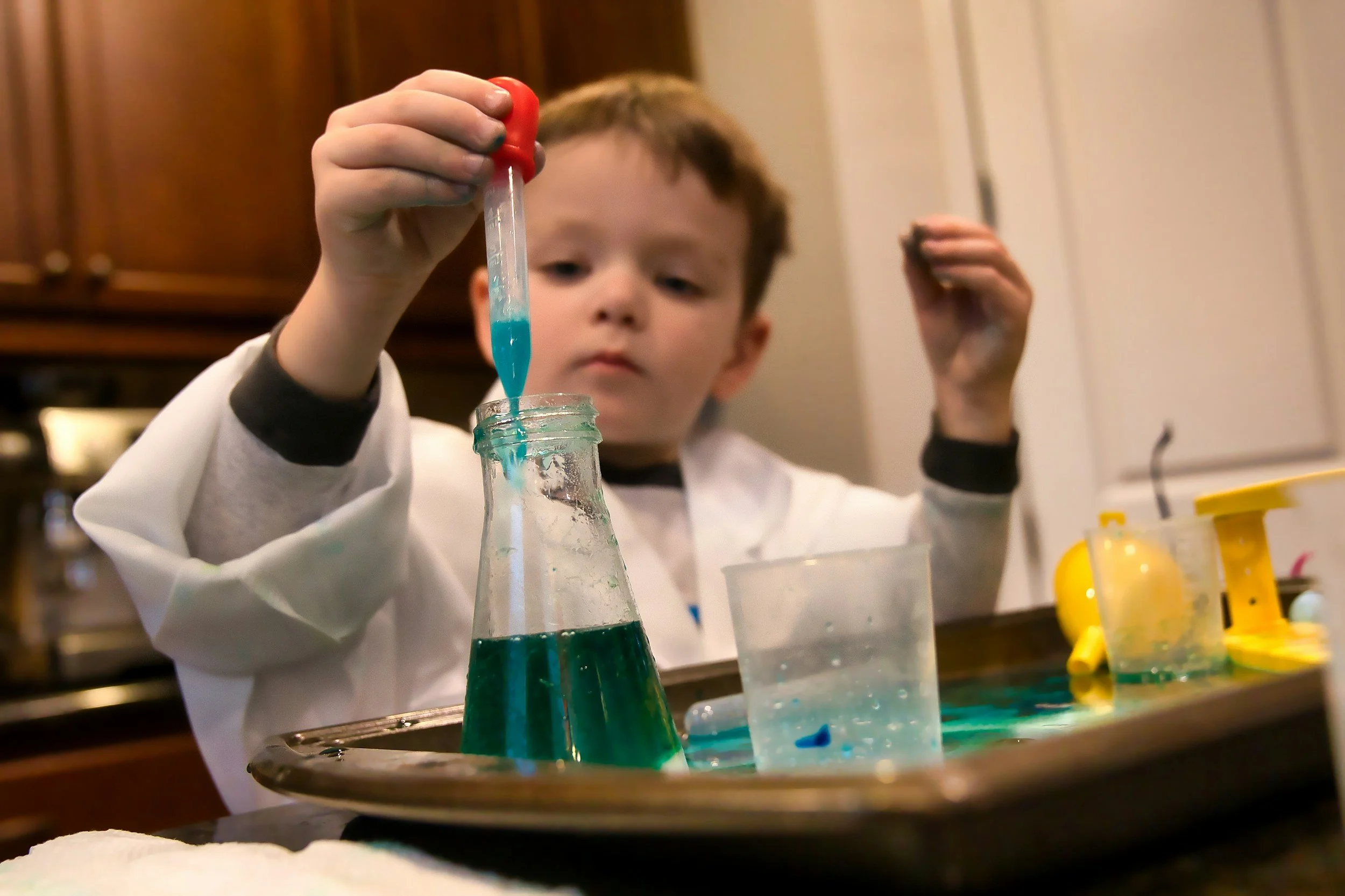
A child could do it!!
If you are planning to compete in a science fair, this blog on scientific method is for you. Judges appreciate it when a science fair presentation is age appropriate, simple, elegant, and clearly communicated by the participant. To this end, the participants should choose a topic that has real-world relevance with a testable question and must demonstrate that they fully understand their project. The most important key to conducting meaningful experiments and clearly presenting the findings is to follow the principles of Scientific Method, and to not deviate from these principles.

“A hypothesis is an idea that can be tested.”
What is Scientific Method?
Scientific Method can be divided into seven simple and discreet steps.
Make an OBSERVATION.
Ask a QUESTION.
Form a HYPOTHESIS.
Make a PREDICTION.
Devise a set of EXPERIMENTS to evaluate the hypothesis.
Observe the RESULTS of the experiment(s).
Draw CONCLUSIONS.
What is a Hypothesis?
A hypothesis is not an educated guess. The best definition that I have heard for a hypothesis came from the children’s program, “Dinosaur Train” and is, “an idea that can be tested.” Of course, this idea does require that the person who is formulating the hypothesis consider all scenarios that may have led to their original observation.
Scientific Method in Everyday Life
Scientific method need not only conducted in a science classroom or in a laboratory setting, Scientific method can and should be used to solve everyday problems. Below is an example where one is using scientific method to solve a problem that is common to many people who drive a car. Can you think of a real-life scenario where you could use scientific method to try to solve a problem?

To learn more about applying Scientific Method to design, conduct and present an award winning Science Fair project, contact me!!! I have judged at quite a few competitions and have mentored even more students. A brief consultation is free.
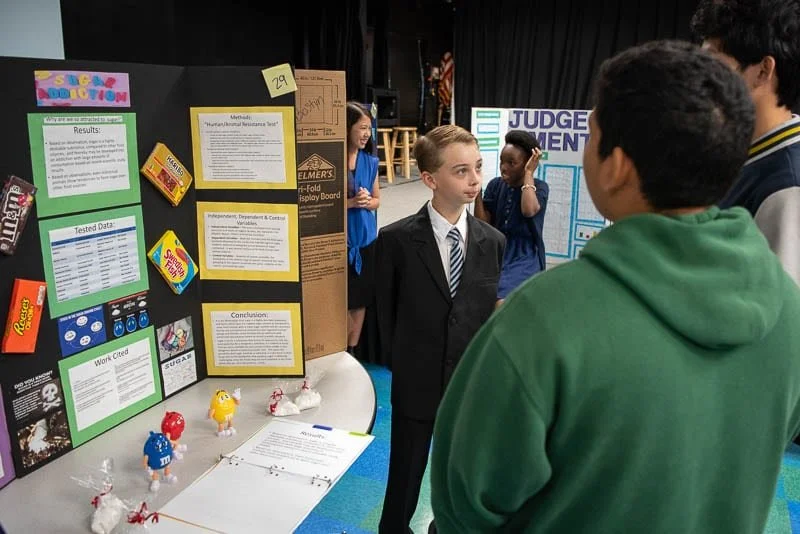
How to succeed at a Science Fair: A Practical Guide for Students Grades 5-12, and their Parents
“An elegant, award winning project does not require a lab—just curiosity and discipline.”
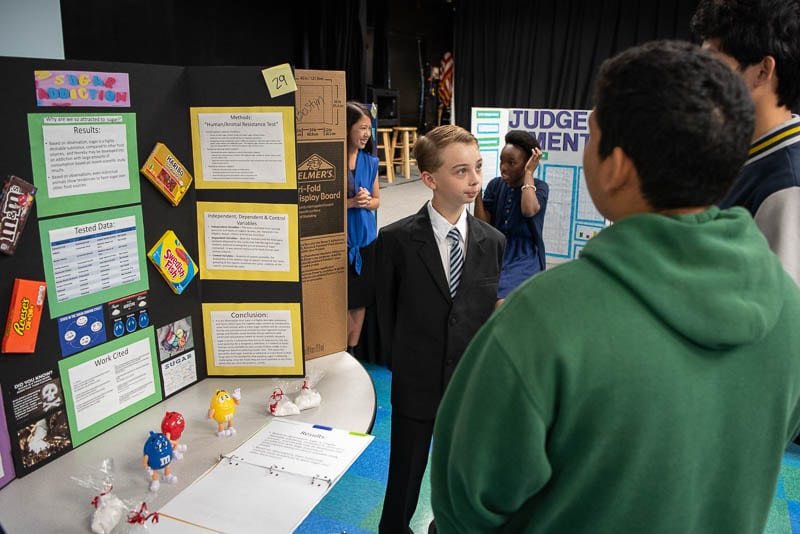
“An elegant, award winning project doesn’t require a lab—just curiosity and discipline.”
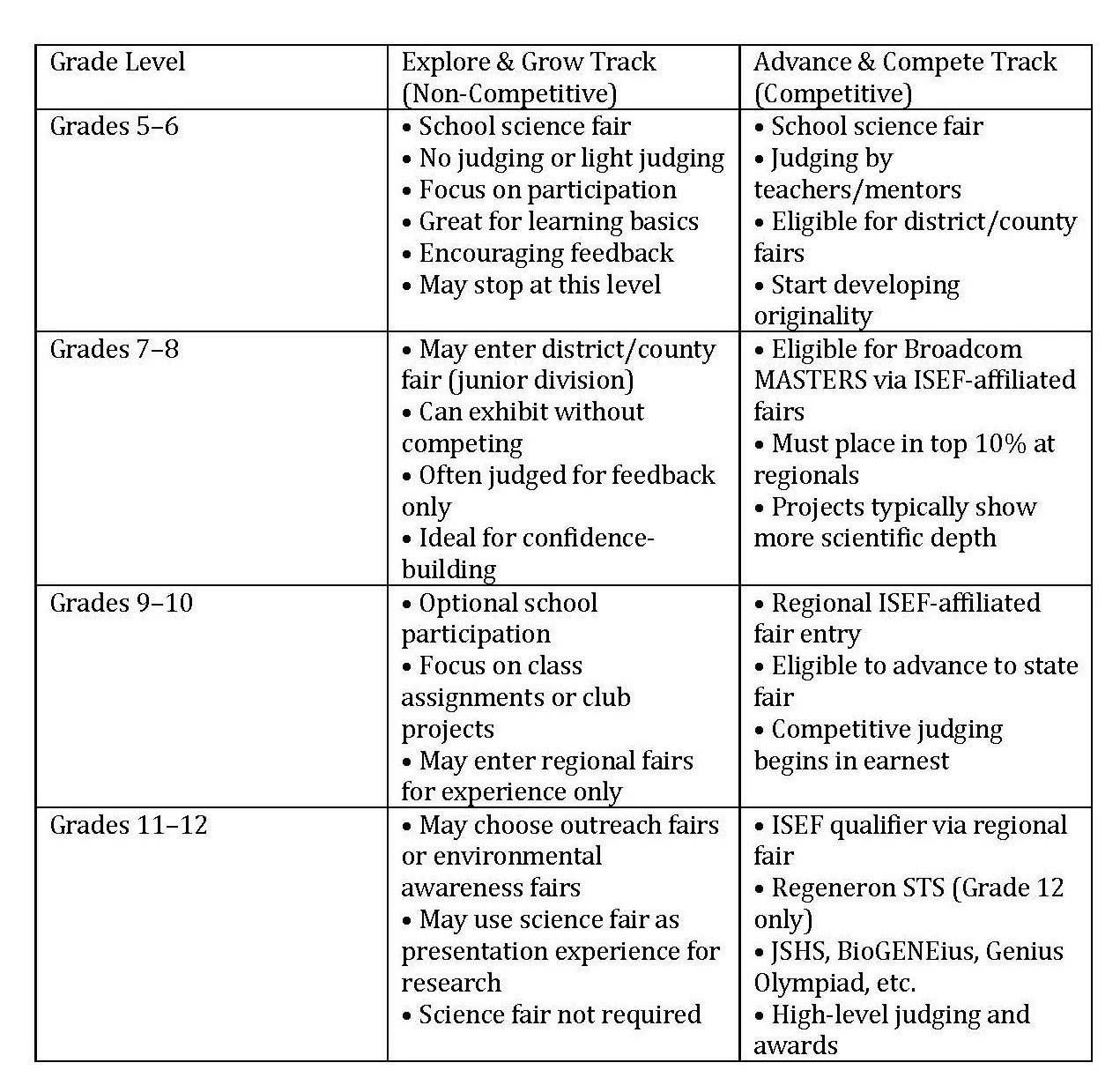
Science Fairs are important platforms where a student can have a positive experience with STEM (Science, Technology, Engineering, Math) while working on a project that they enjoy and find interesting. During this endeavor, students learn to use Scientific Method and to organize and communicate ideas as they gain confidence in scientific writing and public speaking. All these experiences prove to be invaluable for individuals who wish to matriculate into and to perform well in selective colleges and universities. There is a plethora of science fair opportunities for STEM oriented students ranging from grades 5-12. These range from the non-competitive “explore and grow” STEM venues to the highly rigorous “compete and advance” venues. Students who start in the non-competitive venues often find that they enjoy STEM research and decide to switch from the less competitive path to the more competitive path as their interest in the STEM subject or process grows after their initial experiences.
Competitive vs Non-competitive Science Fair Venues
In the low-stakes science fair competitions, students can design and conduct experiments in their classroom or at home, the judging style is educational and encouraging, and the students need not advance to a higher level unless they wish to. Finally, the students who participate in fairs at this level enjoy a much shorter commitment than that required in the high-stakes competitions.
Some students choose to conduct their study in an R01 or R15 level university research lab when competing in the high-stakes science fair competitions. This is not necessary. Many elegant, award-winning projects can be and have been conducted in a home or school setting. However, the project will be more rigorous than that of a low-stakes science fair project and the judges will have extremely high expectations of the student participant. The judges appreciate projects that are original and novel in conception and execution. An award-winning project should have “real world” relevance. The presenters demonstrate both depth and breadth of understanding of the project, adherence to excellent experimental design with the appropriate controls and variables, and a long-term commitment to the project. Students who wish to excel in prestigious science fairs like ISEF (International Science and Engineering Fair) benefit from starting their research early.
Science Fair Pathways for Students Grades 5-12
Regardless of your age or whether you choose the “grow and explore” or the “compete and advance” path, there is a hierarchy to the process. Entry level participation typically starts at the school level; for students in grades 5 through 8, participation is often required. For the noncompetitive track, schools may give out simple awards or participation ribbons; students who perform well at this level may be selected to represent the school in a district or city-wide fair. At this level, the judging style is friendly and educational but is more structured as the judges use a rubric to objectively rank the participants. Students who do well at this level may be invited to participate in a Regional Science Fair, at this level the fair is typically ISEF affiliated for those who wish to transfer to a more competitive track; however, these fairs generally offer “non-competitive, exhibit only” categories for those who prefer a low to moderate pressure experience. From this point on, students have decided to commit to a high-stakes STEM experience. Students who place 1st or 2nd at the regional level fair, that is ISEF-affiliated, are eligible to compete in a State level ISEF affiliated fair or in National/International competitions; these high-ranking fairs include the Broadcom Masters for students in grades 6 through 8 and the Regeneron-ISEF or Regeneron-STS (Science Talent Search) for high school students.
A Synopsis of Science Fair Pathways for Students Grades 5–12
There are two primary pathways for students participating in science fairs: one focused on exploration and growth, and another designed for students who want to advance through competitive levels. Both are valid, rewarding experiences. Here's a comparison to help families and educators understand the options.
The Perks of Participating in Science Fairs
Students who participate in science fairs at any level get to enjoy bragging rights that can be incorporated into a resume for jobs, internships, and college applications.
The prizes for placing high in competitions such as Broadcom Masters, Regeneron-ISEF, and Regeneron-STS are considerable. In addition to substantial cash awards ranging from $5000 to $250,000 dollars, students can expect scholarships, national press coverage, computers, or paid trips to national or international science symposia. With all of the exposure, renowned science faculty may be contacting YOU to join their research team.
Want Help with Your Science Fair Project?
As a PhD-level biology educator with nearly two decades of experience mentoring students I’ve seen firsthand how powerful this process can be. Whether a student is hesitant or highly motivated, there’s a path that can support their growth, build their confidence, and spark their curiosity.
If your student needs help getting started, choosing a topic, or preparing to present, I offer one-on-one science fair coaching for students in grades 5–12. Click here to schedule a free consultation.